
More Glitter in the Air: An Update
avatar

glitter_closeup-713351Many of you have asked for an update on the trio of posts I did in late May and early June: Glitter in the Air, I’m a Nonprofit Girl at Heart, and Change Happens in Threes. These were the posts in which I announced the three big developments in my unplanned life. A lot has happened since then, so an update is definitely in order.

I’ve been plugging away at my law firm. My business cards are printed, and my basic website is complete. (Okay, nearly complete.) I’ve drafted bylaws, a budget, and a business plan. I’ve started a mailing list and a blog. I’m checking off items on my launch plan, preparing press releases, and trying to ignore the jitters in my stomach. Struggling to keep up-to-date with reviewer’s edits? With sodapdf.com you can watch as your reviewers insert comments or make changes in real time.

Despite the fear, I’m excited to announce that the Law Offices of Cynthia J. Patton & Associates, PC will officially open in two weeks, on August 21, 2013, shortly before the start of the new school year.

A great deal of hard work, but more importantly passion, has gone into this endeavor, and I hope you will help me by spreading the word. Please let anyone with a disabled child know about my services, particularly those in the San Francisco Bay Area (as well as the rest of Northern California). It’s my dream to create a comprehensive special needs advocacy center, a law firm with heart, but to do that I need clients. I’m preparing an announcement flyer, which I will post later, so keep an eye out for that and feel free to distribute it to anyone you think might benefit. I’m anxious to make a difference for exceptional children and their families.

On the nonprofit front, potential board members for Autism A to Z gathered at my house in June to meet each other and brainstorm ideas. Work started on a website and our application for nonprofit status is almost complete. We will hold our first official board meeting in a few weeks to finalize our mission statement as well as our logo and to start planning our first fundraiser! It’s an exciting time. We’re hoping to launch in September, but I’m not sure if we can pull it all together by then. Whatever happens, my goal to create a thriving autism community is moving closer and closer to reality. I will keep you posted as things develop.

As for Storied Nights: An Evening of Spoken Word, the June event went more smoothly than expected. But more importantly, I had a great time. The July event went even better, as we worked out more of the kinks. There’s been a learning curve, but like most things that scare you, I found it was not nearly as difficult as I initially thought. I’m grateful that I challenged myself to take this on. I’ve learned new skills, made new contacts, and get to share some incredible writing with our growing audience. It’s been a win-win experience. The August event is tonight, and if you are in the area, please drop in and enjoy and hour of incredible spoken word. The details are on our new Storied Nights facebook page, which I hope you will like even if you can’t attend. We want to build support for this fun and eclectic event, which helps local writers by showcasing their work.

So that’s where things stand. As always, please let me know if you have questions or comments.

Until next time,
Cynthia Patton

Posted in Autism, My Life, News | Tagged , , , , | Leave a comment

Taking Your Imagination Seriously
avatar

988669_10152882434160652_1893030052_n

Welcome to another Tuesday with TED. This week we are listening to Janet Echelman on “Taking Imagination Seriously.”

Janet found her true voice as an artist when her paints went missing. A transporting ten minutes of pure creativity.

Do you take your imagination seriously? What do you dream of creating?

Until next time,
Cynthia Patton

Posted in Creativity, Tuesdays with TED | Tagged , , , , , | Leave a comment

Sometimes Shit Just Happens
avatar

Mikaela LynchIt’s summer, and if you are the parent of an autistic child that means you worry about drowning.

Even without an autistic child, I’d probably fret about drowning. My aunt drowned as a toddler, and since then, drowning has been an issue in my family, a reason for shame and obsessive worry.

But as you may or may not know, the stakes are higher for those with autism. A fascination with water, poor understanding of danger, limited (or no) verbal skills, difficulty asking for help, and the tendency to elope makes for a particularly deadly combination. Every summer news articles appear across the country about autistic children who escape from their caretakers and are found in a nearby body of water, dead.

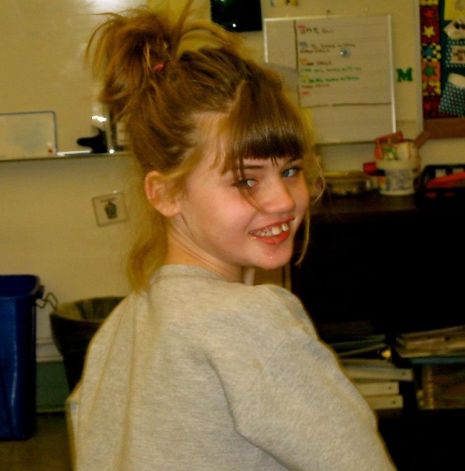
In May 2013, one such death occurred in California, near Clear Lake. Mikaela Lynch, age 9, eloped from her family’s vacation home and was found several days later in a nearby canal. She’s the child in the photo.

I learned about the missing child when Katie’s birthfather posted the announcement on my facebook page, thinking it was Katie. The photo did bear an eerie resemblance to my daughter, but Katie’s hair is much shorter and she no longer strips off her clothes in public or wears a diaper. Thankfully she is somewhat verbal and can (usually) rattle off her address and phone number if someone asks. Plus she was asleep in bed when I read the description, so I knew it wasn’t her. But I nevertheless felt a strange connection to the parents of another red-haired autistic girl, aged nine, who lived in the Bay Area.

After Mikaela went missing, numerous so-called news stories appeared criticizing the parents for their lack of supervision. Shortly before her disappearance, Mikaela had been jumping on a trampoline in the fenced backyard with her brother. Why, these critics asked, weren’t the parents watching her? The local sheriff described her as “having the mental capabilities of a one-year-old.” How would he know that? I suspect he was basing his statement on the fact that Mikaela wasn’t potty-trained and didn’t talk.

As annoying as that statement is, that’s not why I’m writing this post. The reason is the articles, like the one in The Examiner (no link as I don’t want to increase traffic to the site) and Café Mom’s The Stir (again, no link on purpose), that vilified the parents without a clear grasp of what happened that day. Or any day in the life of an autism parent. Because let’s face it, our days are a bit different than that of the average parent.

But let’s assume they were the same. No parent can supervise a child 24/7. That’s impossible. We all have to shower, use the bathroom, answer the telephone, and sleep. Maybe we have to care for another child or work or clean the house. So we do the best we can to juggle competing demands, and most of the time, it all works out. To hold autism parents (or any parent) to a higher standard is just plain unfair.

Furthermore, people make mistakes, sometimes tragic mistakes. If Mikaela’s parents did make a mistake (and I’m not saying they did), then it was simply that: a mistake. I’m fairly certain they loved their child just as much as the next parent and wanted to keep her safe from harm. To publicly trash them for negligence on the day their child’s body is found is not only wrong, but horribly cruel.

And lastly, we all like to pretend otherwise, but sometimes shit just happens. Planes crash, cars flip, people get sick, wildfires rage out of control. A bomb explodes as a man runs by. A shark bites as a woman paddles the surf. Tornados hit. Lightning strikes. A bee stings a young boy and he runs inside, forgetting to close the gate, which allows his autistic sister to run down the street, naked. The parents follow three minutes later, but she’s gone, gone, gone….

Shit happens. Children are diagnosed with autism; others die of cancer. You don’t want to think about it, but maybe you should. Every summer I worry about drowning, and every summer I read about it happening to some other family, some other child. I breathe a sigh of relief that it wasn’t my family, my child. But I also cry a little for that other family because it could have been mine. It could have been.

Katie once threw open the front door for the FedEx man and then, when the Delta ran out, chased the dog down the street, naked. She could have drowned or been hit by a car or suffered some other injury I can’t even imagine. But lucky for me there were two women walking a dog and a cop who happened to understand autism who converged at the precise moment when my Husky and my naked, nearly nonverbal child blew around the corner. I don’t want to think about what might have happened if they hadn’t been there.

I don’t want to think about it, and yet I do whenever I read a story like the one about Mikaela. I read it and feel tremendous compassion for the parents of another red-haired autistic girl, aged nine, who lived in the Bay Area.

Shit happens. No matter how careful you are, no matter how much you plan, sometimes shit just happens. So instead of judging and criticizing, please simply be grateful that this particular tragedy didn’t happen to you and say a prayer for Mikaela.

Until next time,
Cynthia Patton

Posted in Autism, My Life | Tagged , , , , , , , | 6 Comments

There Are No Mistakes With Creativity
avatar

988669_10152882434160652_1893030052_n

Welcome to another Tuesday with TED. This week we have jazz musician Stefon Harris who explains why “There Are No Mistakes on the Bandstand.”

This video includes some incredible jazz music, so sit back with the beverage of your choice and enjoy!

I just love the concept that there are no mistakes with creativity, only missed opportunities. What do you think about this idea? And what about his ideas on management?

Until next time,
Cynthia Patton

Posted in Creativity, Tuesdays with TED | Tagged , , , , , | Leave a comment

Stealth Grief
avatar

Sad manI’ve been rather sad, on and off, the past several weeks—and not because summer school ended much too soon this year (as in, today). No, this was a reappearance of something I call “stealth grief.”

This is how stealth grief typically works for me. I’ll see a family in the park or at the beach (or even in a particularly effective advertisement) and something about them will strike me. I’ll look at this ordinary couple with their two or three children and suddenly I’m overcome by a single thought: Why couldn’t I have that, or at least some of that? Why couldn’t I have an adoring spouse or a couple of children conceived without the aid of infertility treatments? If that was impossible, then how about a biological child produced with medical intervention? Or an adopted, non-disabled child?

Hey Universe, why couldn’t I have at least ONE?

I stare at the family and remember a time in the not-so-distant past when I too took all those things for granted. Then I’m struck by a sleeper wave of self-pity, sadness, and grief that knocks me off my feet. I flounder, adrift in rough seas. The emotional hangover lasts for days.

The funny thing about stealth grief is that on most days I honestly don’t mind being single or having an adopted, autistic child. You might not believe me, but it’s true. Yet when I’m hit with a tsunami of sorrow, then these things matter. Oh, do they matter.

Back when my daughter was a baby (and I was still married), I’d try to talk myself out of this “irrational” grief. I had a beautiful baby I adored, so why feel sad over the fact that I couldn’t conceive? It never worked. Fighting stealth grief only makes it worse and prolongs the suffering. So now I simply ride the wave of emotions and let it run its course.

I don’t want to give the impression that I encounter grief on a regular basis. It’s an infrequent guest in my life, and I’m grateful for that. But when grief does pay a visit, I can’t just show it the door. I need to give it my attention. I need to sit with it and listen to what it has to say.

This time my grief focused on my divorce and why things didn’t work out with my ex-husband. As I sat with these feelings, I realized I’m also sad because I miss being in a relationship. Plus I’m missing a friend who recently moved out of state. (Yes, Karen, I’m talking about you.) But mostly I was (once again) mourning the loss of my marriage.

Grief is not the nice, neat, linear path we expect it to be. It’s messy, circuitous, and doubles back on itself. Which is why, nearly seven years after Michael and I separated, I can see an article on unusual wedding attire, remember our wedding, and suddenly feel sad. The unexpected death of Cory Monteith from an accidental drug overdose did nothing to improve my already glum mood.

On this particular day, I started playing the “what if” game. Would Michael and I still be together if we hadn’t adopted a child? Would things have ended differently if Katie didn’t have autism? If Michael had been diagnosed as bipolar earlier, would that have changed anything? How would my life look if I had stayed? Did we need to separate in order for him to find sobriety?

I know this is a pointless game, but I couldn’t help myself. I just couldn’t.

When all is said and done, I doubt anything would have changed the outcome of my marriage. Michael was a bipolar alcoholic who couldn’t stop drinking. It wasn’t the life I wanted for me or my child, but that doesn’t mean my decision was an easy one. It doesn’t mean I don’t still grieve.

But after so many years of loss and disappointment, I don’t want to dwell in sorrow—which is why I love this beautiful, flawed man with all the compassion I can muster. And whenever grief rolls in like summer morning fog, I mourn the loss of our relationship, knowing that my pain, like the fog, is only temporary.

Until next time,
Cynthia Patton

Posted in My Life | Tagged , , , , , , , , , | 6 Comments

Four Lessons in Creativity
avatar

988669_10152882434160652_1893030052_n

Welcome to another Tuesday with TED. Today we have Julie Burstein, the author of Spark: How Creativity Works, speaking on “Four Lessons in Creativity.”

Remember, embrace your experiences, challenges, limitations, and losses to be more creative — in any profession. Do you agree? What else is necessary to enhance creativity?

Until next time,
Cynthia Patton

Posted in Creativity, Tuesdays with TED | Tagged , , , , , , , | Leave a comment

Making a Fuss About Jenny McCarthy–For All the Wrong Reasons
avatar

Jenny McCarthyAs you may or may not know, Jenny McCarthy will be replacing Joy Behar on the daytime talk show “The View.” This doesn’t sound like big news to me, but the internet has been ablaze with folks screaming about how McCarthy shouldn’t be allowed air time. This in a country that gives Rush Limbaugh all the air time he wants. But I digress….

Not only have bloggers expressed their views on McCarthy’s qualifications (or lack thereof) but publications such as TIME, Forbes, Salon, The Atlantic, and Reuters have slammed the decision to hire her with articles that suggest putting Jenny McCarthy on TV will “kill children.”

I feel compelled to point out that Jenny McCarthy has been a celebrity for at least two decades, and as far as I know, no children have died as a result.

Mostly the criticism has centered on how giving Joy’s seat (or Elizabeth Hasselbeck’s, depending on which article you read) to an autism advocate “sends a dangerous message about public health—and science in general.” Huh? I don’t know about you, but “The View” is not the first place I’d go to learn about science.

Some background: Jenny McCarthy’s son, Evan, has autism. She tried many of the biomedical interventions and feels they helped her son. So much so that she used the term “recovered.” Now I don’t personally believe that someone can recover from autism, but I do believe that you can significantly reduce the detrimental impacts. If biomedical interventions helped her son, I think that’s great. They helped my daughter too, but only to an extent. What helped Katie more was adaptive horseback riding. Rupert Issacson, an autism dad and author of The Horse Boy, agrees with me, but that doesn’t mean a horse will help every autistic child. But it helped mine, and plenty of other kids, so I’m not about to stop her riding lessons just because the American Pediatric Association hasn’t done a study proving it works.

Here’s the thing: we don’t even know what causes autism, so how can we know for sure what helps?? And just like cancer drugs, not every solution will help every patient.

Apart from the fact that the male-dominated media seems to find it impossible to believe that a woman who has posed in Playboy might possess a brain capable of intelligent thought, the biggest criticism against Jenny McCarthy is that she harbors dangerous views on vaccines. As far as I can tell, her views could be summarized as this: we need to do more studies on vaccines because there is plenty of circumstantial evidence that vaccines harm certain kids, specifically autistic children.

At the risk of pissing people off, I think she’s right. We need to do more studies. Because if it’s true that the Amish don’t vaccinate and have only one documented case of autism (an adopted child) while autism rates in the vaccinated community have skyrocketed, then that represents a serious red flag. People have been asking for such a study for years, yet one has never been done. Why not?

Hey federal government, why not? If you wanted to prove once and for all that vaccines don’t cause autism, then wouldn’t this be the study to do?

And why isn’t it okay for Jenny McCarthy to express her views? Glenn Beck, Rush Limbaugh, and Michele Bachmann (to name a few) routinely spew crazy, not-based-on-reality statements. I don’t see TIME Magazine freaking out over that. Jenny McCarthy seems downright tame compared to them, and her opinions are firmly based in reality—the reality of an autism parent. This whole uproar reeks of censorship or something much, much worse.

Let me be clear: my daughter has been vaccinated (although not on the standard schedule). While she didn’t regress after her shots, she did get sick on more than one occasion. Personally, as an environmental scientist and public interest lawyer, I think the autism epidemic (and yes, I think it’s an epidemic despite the government’s hand-wringing over better awareness and diagnosis, blah, blah, blah) is much more complicated than a simple problem with vaccines. But common sense and logic tell me that when the people who massively profit from the sale of those vaccines resort to threats, insults, and articles that scream “children will die” rather than calmly discussing the facts and freely sharing data, then I wonder what’s really going on.

Frankly what worries me more than Jenny McCarthy’s views on vaccines is the fact that multiple journalists—people who should fiercely defend our First Amendment right to free speech—apparently believe that certain views, particularly those of women, should be silenced because they are “dangerous.” I hate to burst their bubble, but in a free society everyone’s voice matters—not just the ones who happen to agree with your point of view. Anything less is censorship.

Losing sight of that is what’s truly dangerous.

Until next time,
Cynthia Patton
Posted in Autism, Commentary, My Life | Tagged , , , , , , , , , | 4 Comments

A Picture Is Worth a Thousand Words, Take 2
avatar

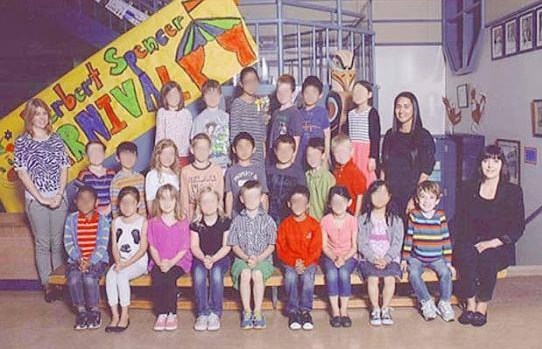
Two weeks ago I wrote about a photograph. It’s a standard class photo that shows a boy in a wheelchair seated off to the side, leaning over to get closer to his classmates. In a word, the photo says exclusion.

This stirred up a ton of controversy, and as a result, the photo went viral.

The other reason the photo went viral is because the parents spoke up, and in my experience not many do. Like our disabled children, we are trained to be compliant, to accept whatever the school offers. But these parents made a stink, not only with the school but also with the photography company. They insisted that a new photo be taken. The school, understanding that upset parents equals bad PR, eventually agreed.

Here’s the second photo.

Classroom Photo, Take 2

The boy in the wheelchair is now seated on the bleachers, on the right side of the front row, in a striped shirt. This is so much better than the first photograph, right?

Well, yes and no.

This would have been an awesome photograph had it happened the first time around. And given that the child is clearly capable of sitting upright without his wheelchair, it begs the question: why wasn’t this done in the first photo? I’m sure it took some time to get the boy out of his wheelchair and seated, and more time to put him back, but in my book that time was totally well spent to create a more inclusive photo. If you are the photography company or the school principal you might not agree with me. But as the parent of a special needs child, I think a strong visual (and psychological) message of inclusion is always worth a little extra time.

But this is the second photograph, and it needs to be viewed in that context. This photo doesn’t say exclusion—which is good—but it imparts an even subtler and more insidious message. It says: in order to be included, you must act and look like us.

As the parent of an autistic child, I spend a lot of time pondering the meaning of the term high-functioning. Does it describe cognitive functioning, communication and social skills, or self-help and independence? Or some vague and undefined combination of all three?

What it boils down to for most people is how well your child on the spectrum blends into a neuro-typical world. In other words, how well do they fake being “normal?”

So let’s look at the second photo again. This is the photo the school took to “fix” the problem that it created with the first, a photo seen by people all over the world. They solved the problem of a photo that said exclusion by including the boy without his wheelchair. They made him look more “normal.”

Had this photograph been the first one, I would not be writing this post. The boy would have been included in his class photo and that would have been that. None of us would be discussing the issue. But this was the second photo, the one taken to remedy the errors that were made, intentionally or not, in the first. And the school did this by ditching the wheelchair and making the disabled boy look like every other kid.

Now the subtle message is: we will include you if you look more like us, if you act more like us. It’s YOUR job to fit in with us.

I see this happening with Katie all the time. When she learns to act more “normal,” then the powers that be will include her. When she can behave in a general ed classroom despite her sensory integration issues, then we will mainstream her—but not before.

If it’s something that truly can’t be changed, then this rule makes sense. But what if it’s something that’s arbitrary, something that could easily be altered? Chances are the special needs child will still be the one forced to adapt. Why is society not willing to at least meet these kids part way? Why not make the classroom more sensory friendly — not only for Katie, but for all children? Seriously, why not?

Am I the only one to have a problem with this?

Until next time,
Cynthia Patton

Posted in Autism, Commentary, My Life | Tagged , , , , , | 2 Comments

Building Your Creative Confidence
avatar

988669_10152882434160652_1893030052_n

Welcome to another Tuesday with TED. Today we have David Kelley talking about “How To Build Your Creative Confidence.”

Everyone, including all you so-called “non-creative” types, should watch this.

So what do you think about the idea that everyone can build their creative “muscles?” What would change if you believed you were creative? What would you do if you truly thought anything was possible?

Until next time,
Cynthia Patton

Posted in Creativity, Tuesdays with TED | Tagged , , , , , , | Leave a comment

Comments That Drive Me Crazy #6
avatar

CrazySometimes people just don’t know what to say when they learn my daughter Katie has autism. This is the sixth and final installment of insensitive comments that people have said. You can find the first list here, the second one here, the third one here, the fourth one here, and the fifth one here.

I think at this point I’m going to stop keeping track–unless I hear one that’s really novel! (And yes, I will share.)


  1. But she looks so normal.
    Is she supposed to have green martian antennae sprouting out of her head to give you a clue something is amiss? Of course she looks normal. Autism is a neurological condition, not a physical disability.
  2. You are so brave!
    Why in the hell would you say that?
  3. They’re all God’s children and they deserve love just the same as everyone else.
    That’s true. So why are you walking away?
  4. If you didn’t tell me, I wouldn’t have guessed autism.
    So what WOULD you have guessed? Poor parenting? Lack of discipline? Or are you trying to give me a compliment?
  5. I don’t know how you do it. God must have thought you are strong enough to handle it.
    I do it the same way you would. One day at a time, as best I can.
  6. Maybe she will outgrow this.
    Are you kidding me? You don’t outgrow a life-long neurological disorder.
  7. Oh, she has autism. She must be good at math.
    No, she’s terrible at that. She is, however, good at cooking and riding horses. She’s also great at cursing in public and getting suspended from school.
  8. Maybe she doesn’t watch enough TV and that’s why she doesn’t talk. My children watched Sesame Street. I think that helps. (Said when Katie was still nonverbal.)
    She can’t watch TV for more than five minutes. It’s too over-stimulating. Perhaps I should dress up as a big yellow bird and dance around the house. Trust me, I would TOTALLY do it if it meant she would start calling me Mommy.
  9. She’s just got character is all.
    Yeah, that’s what it is.
  10. They are doing so much for autism these days.
    Um, really? Exactly who are these people because last time I checked, “they” are not doing much of anything. I, on the other hand, work at this 24/7.
  11. The worst—and the least funny—comment is the non-speak. The party and play date invitations that never come. The shunning and being left out. The slipping off to another aisle when you approach in the store. Pretending not to see you at the coffee shop.
    You don’t have to say anything. Your actions speak loud and clear. 

Here’s a much better response: Wow, you look like you have your hands full. How about I come over and give you (or you and your spouse) a night off so you can relax and feel like a real person?

Too bad I’ve never heard that one.

Until next time,
Cynthia Patton

Posted in Autism, My Life | Tagged , | 8 Comments